
Dekton and Porcelain Worktops London: Ultra-Compact Surfaces Explained
Why London kitchens are specifying Dekton and large-format porcelain worktops, what they cost, and how they differ from quartz.
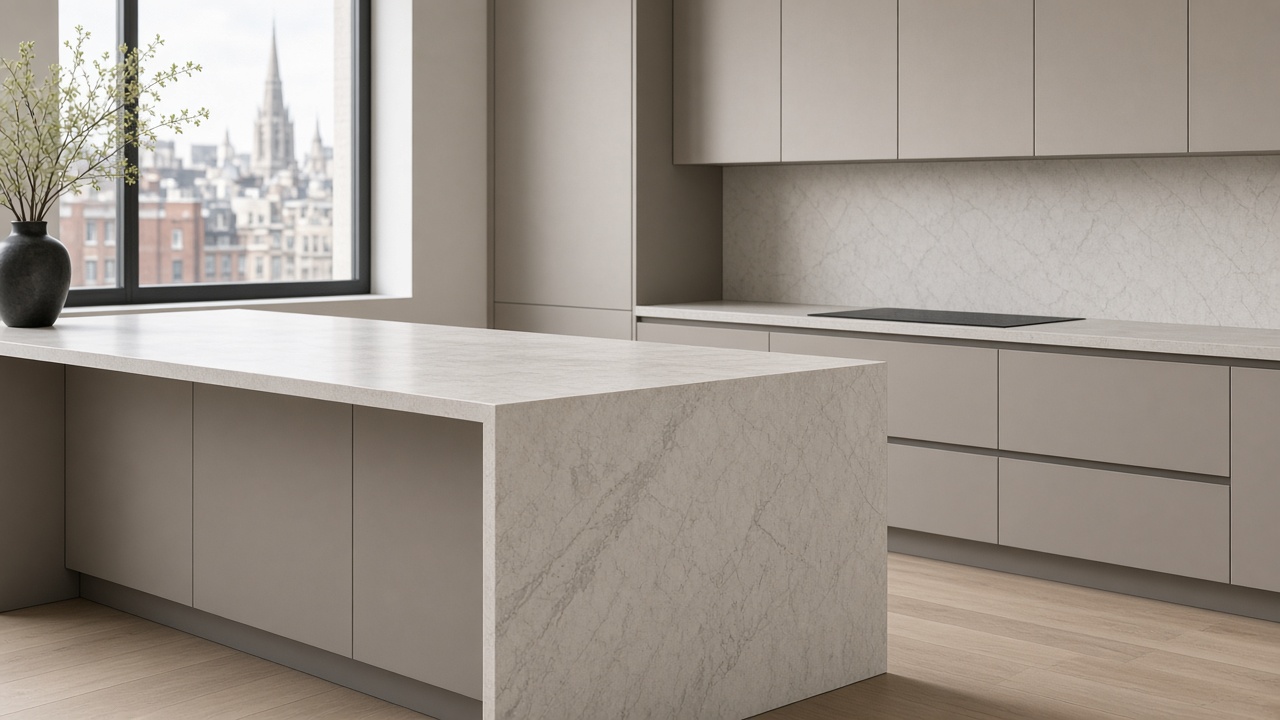
Dekton, Neolith and other sintered or porcelain slab worktops are climbing UK search charts because they promise extreme heat, scratch and UV resistance. They suit indoor-outdoor London kitchens, roof terraces, and clients who want a 12mm slim profile or a full-height book-matched splashback from the same slab.
They are not cheap, and they need specialist fabrication. This is a specification article, not a brand advert — use it to decide whether porcelain belongs on your shortlist next to quartz and granite.
Contents
1 What ultra-compact and porcelain slabs are
2 London prices and lead times
3 Pros, cons and who it is for
4 Frequently asked questions
What ultra-compact and porcelain slabs are
Sintered surfaces like Dekton are manufactured under high heat and pressure into dense, low-porosity slabs. Large-format porcelain worktops are ceramic slabs thick enough (often 12mm or 20mm) to use as counters. Both can mimic marble, concrete and oxidised metal more convincingly than older ceramics.
London prices and lead times
Here are some of the most popular kitchen worktop materials:
Expect £2,500–£6,000+ fitted for a typical kitchen, more for matching splashbacks and mitred islands. Fabricators with the right CNC tooling and experience matter more than with commodity quartz. Lead times can be longer if the colour is not in UK stock.
Pros, cons and who it is for
Outstanding heat and sun stability make porcelain a strong choice for south-facing orangeries and outdoor kitchens. Edges are thinner and can chip if knocked with a cast-iron pan; some colours show dirt in micro-texture. If you want seamless coved upstands and on-site repairs, solid surface still wins.
Frequently asked questions
Is Dekton better than quartz?
It is more heat- and UV-tolerant. Quartz often offers more colour choice at a lower price and a slightly warmer tactile feel. For most indoor London family kitchens, quartz remains the volume choice; porcelain is the specialist performance choice.
Can porcelain worktops crack?
They are very hard but not unbreakable. Poor support, flexing cabinets, or a heavy impact on an unsupported overhang can crack a slab. Correct carcassing and installation are essential.
Next step
Ready to compare surfaces for a London kitchen? Request a quote, order a free sample, or browse the full worktop range.
